In Gurgaon, the fixed charges on an electricity bill are paid by whichever side the rent agreement names, because no Haryana law we could find assigns them to the tenant or the owner. The cleanest split is that the tenant pays the whole DHBVN bill, fixed charges included, for the days between the move-in and move-out meter readings, and the owner pays for every day outside them.
That makes the agreement and the two readings the whole story. This guide explains what DHBVN's fixed charges are and what they cost in 2026-27, what the central model law and Haryana's own rent law say, and how to handle the deposit, the last bill and society prepaid meters. It is general information, not legal advice.
What are fixed charges on a DHBVN bill?
A fixed charge is a monthly amount set by the load sanctioned for the connection, not by the units you use. DHBVN's tariff circular D-04/2025, dated 11 April 2025, states it in rupees per kW per month of the connected load. The Haryana Electricity Regulatory Commission (HERC) announced on 25 March 2026 that the tariff stays unchanged for 2026-27, from 1 April 2026. We read both on 22 November 2026.
| Sanctioned load (domestic category) | Monthly units | Fixed charge per kW of load, each month |
|---|---|---|
| Up to 2 kW (I) | Up to 100 | None |
| Up to 5 kW (II) | Up to 300 | None |
| Up to 5 kW (II) | 301 or more | Rs 50 |
| More than 5 kW (III) | Any | Rs 75 |
Two worked examples from that schedule:
- A 4 kW flat that uses 350 units in May pays Rs 200 in fixed charges that month (4 × Rs 50). In a cooler month under 300 units, it pays none.
- A 6 kW house pays Rs 450 every month (6 × Rs 75), whether the family uses 50 units or 800, and even when the house is empty.
The energy charge per unit, the slabs and what sits on top of them (duty, municipal tax and the fuel adjustment) are in our guide to the current electricity rate per unit in Gurgaon.
Fixed charges are not the meter deposits
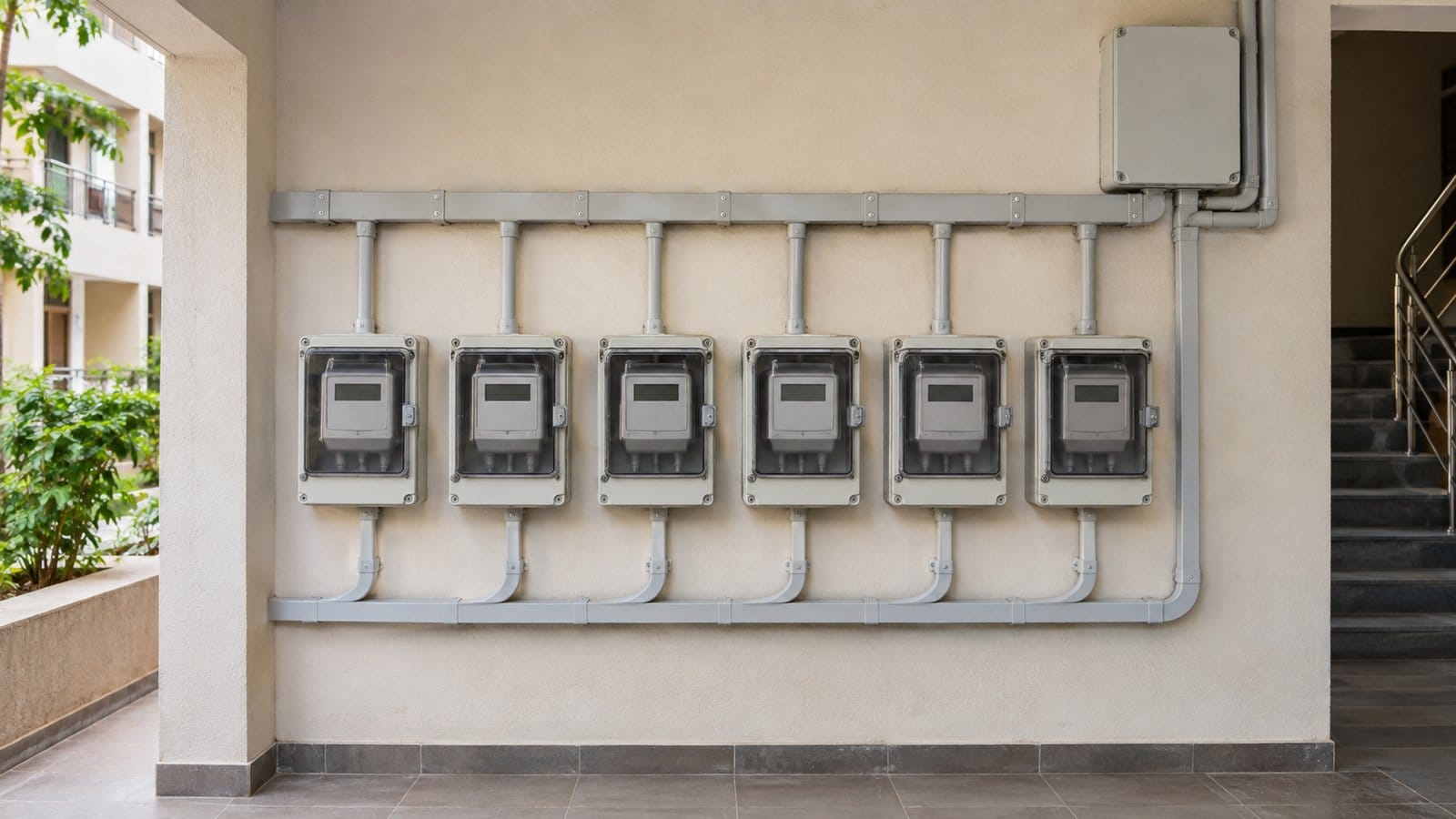
People often call two other items "meter charges". Both are one-time deposits, not monthly charges. DHBVN's schedule of charges for new connections asks for an advance consumption deposit of Rs 750 per kW for a domestic connection, and meter security of Rs 600 for a single-phase meter or Rs 1,430 for a three-phase whole-current meter. These sit with the person in whose name the connection stands, which in a rented home is usually the owner. Our guide to transferring a DHBVN connection explains when they come back.
What does the law say about who pays?
Neither law that a Gurgaon renter is likely to read answers the question directly. Both leave it to the agreement.
The Model Tenancy Act, 2021. The Union Cabinet approved it on 2 June 2021 for states and union territories to adopt, and PRS Legislative Research describes it as a suggestive framework. In the text of the Act, section 13 says the tenant pays "rent and other charges payable" as agreed in the tenancy agreement, and the form for informing the Rent Authority has a line for electricity under "other charges payable". So even the model law expects the agreement to settle it. It also caps a residential security deposit at two months' rent (section 11) and bars a landlord from withholding essential supplies, electricity included (section 20).
Haryana's position. On 22 November 2026 we found no Haryana law adopting the Model Tenancy Act. The rent law on the state's Urban Local Bodies website is the Haryana Urban (Control of Rent and Eviction) Act, 1973. Section 9 of that Act treats electricity as an amenity, and section 10 says no landlord shall, without just and sufficient cause, cut off or withhold any amenity the tenant enjoys. It says nothing about fixed charges. In June 2018 the state government announced its approval of a Haryana Urban Tenancy Act, 2018, with a rent court; we found no record that it was passed and brought into force.
In short: the two-month deposit cap of the model law does not bind a Gurgaon landlord, the 1973 Act protects the supply itself, and the bill is split however your agreement says.
How should the rent agreement split the electricity bill?
Write each item into the agreement, using the meter readings as the dividing line. Here is a split you can propose; change it to suit your deal.
| Item | Suggested payer | Why |
|---|---|---|
| Energy and fixed charges between the two readings | Tenant | The tenant has the supply and decides the use |
| Bills and arrears up to the move-in reading | Owner | They belong to the earlier occupant |
| Fixed charges while the home stands empty | Owner | Nobody else is using the connection |
| Advance consumption deposit and meter security | Account holder, usually the owner | They are deposits on the connection |
| A load increase the tenant asks for | Agree in writing first | It can move the home into a higher fixed-charge category |
| Repairs to switches and sockets | Tenant, if the agreement follows the model law | The model law's second schedule puts these on the tenant |
| Repairs to the wiring | Owner, if the agreement follows the model law | The model law's second schedule puts these on the landlord |
Three clauses prevent most arguments:
- The readings. "The meter reading on [date] was [number]; the tenant pays all bills from this reading until the reading taken at handover."
- Part months. "For the first and last month, fixed charges are shared by the number of days each side occupied the home."
- Proof. "The tenant hands over a paid receipt for each bill within [number] days of payment." The model law's section 13 has a similar idea: the landlord gives a signed receipt for rent and charges, and a bank record of an online payment counts as proof.
Stamp duty and the choice between notarised and registered agreements are covered in how to make a rent agreement in Gurgaon.
What should happen at move-in?
The first reading is what protects a tenant from an earlier occupant's bills.
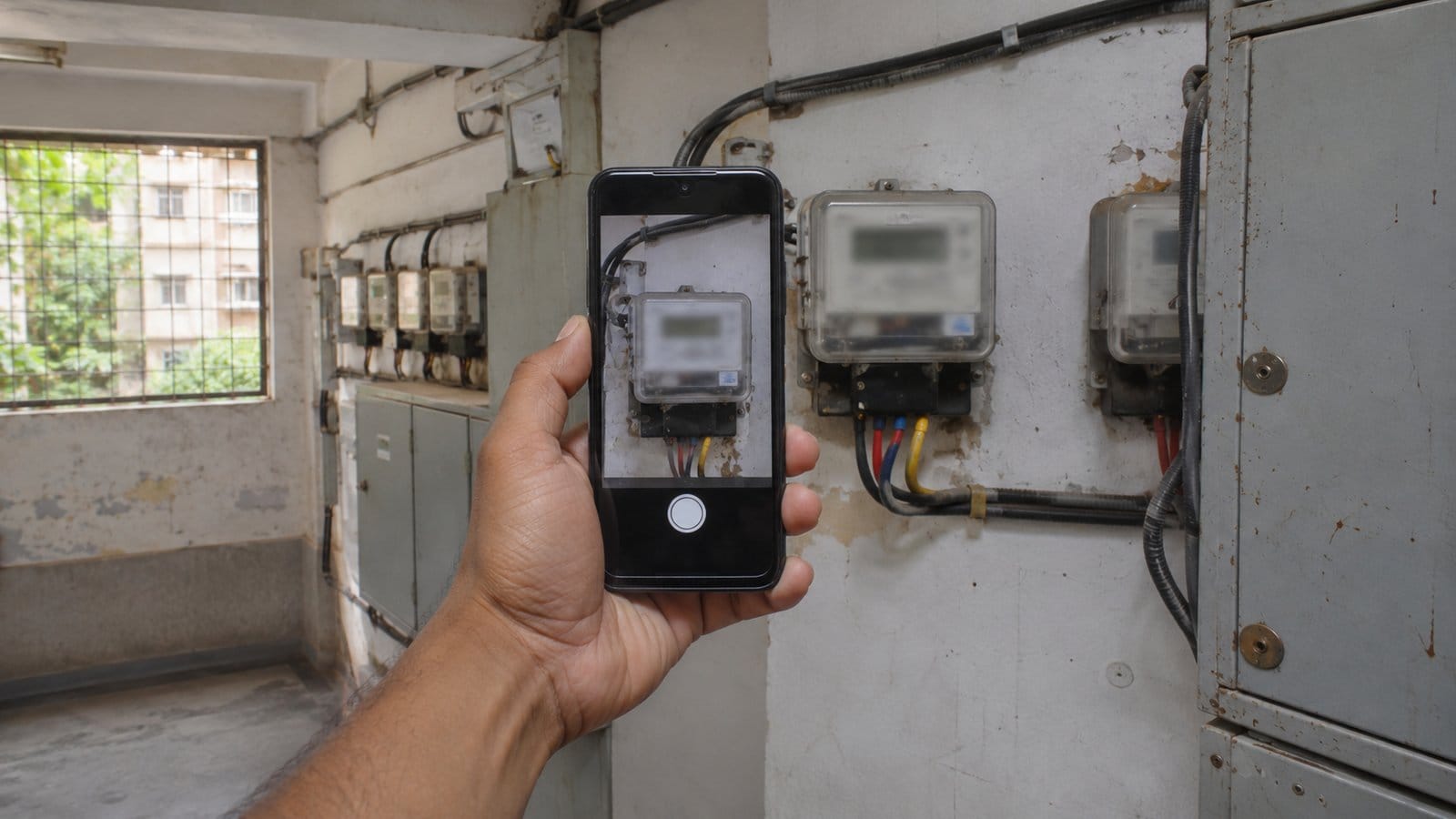
- To do: Photograph the meter display with the date, and write the reading into the agreement or a signed handover note.
- To do: Ask the owner for the latest paid bill and check it shows no arrears.
- To do: Note the sanctioned load printed on the bill, so you know your fixed-charge category.
- To do: Ask whether the connection is a DHBVN meter, a DHBVN prepaid smart meter or a society sub-meter.
- To do: Agree who pays if the next bill covers days before you moved in.
Electricity is one of several move-in papers. Police verification of the tenant is another, and our guide to tenant police verification in Gurugram explains who files the form, the fee and the timeline.
What should happen at move-out?
The last DHBVN bill usually arrives after the tenant has left, so the move-out reading and the deposit have to work together.
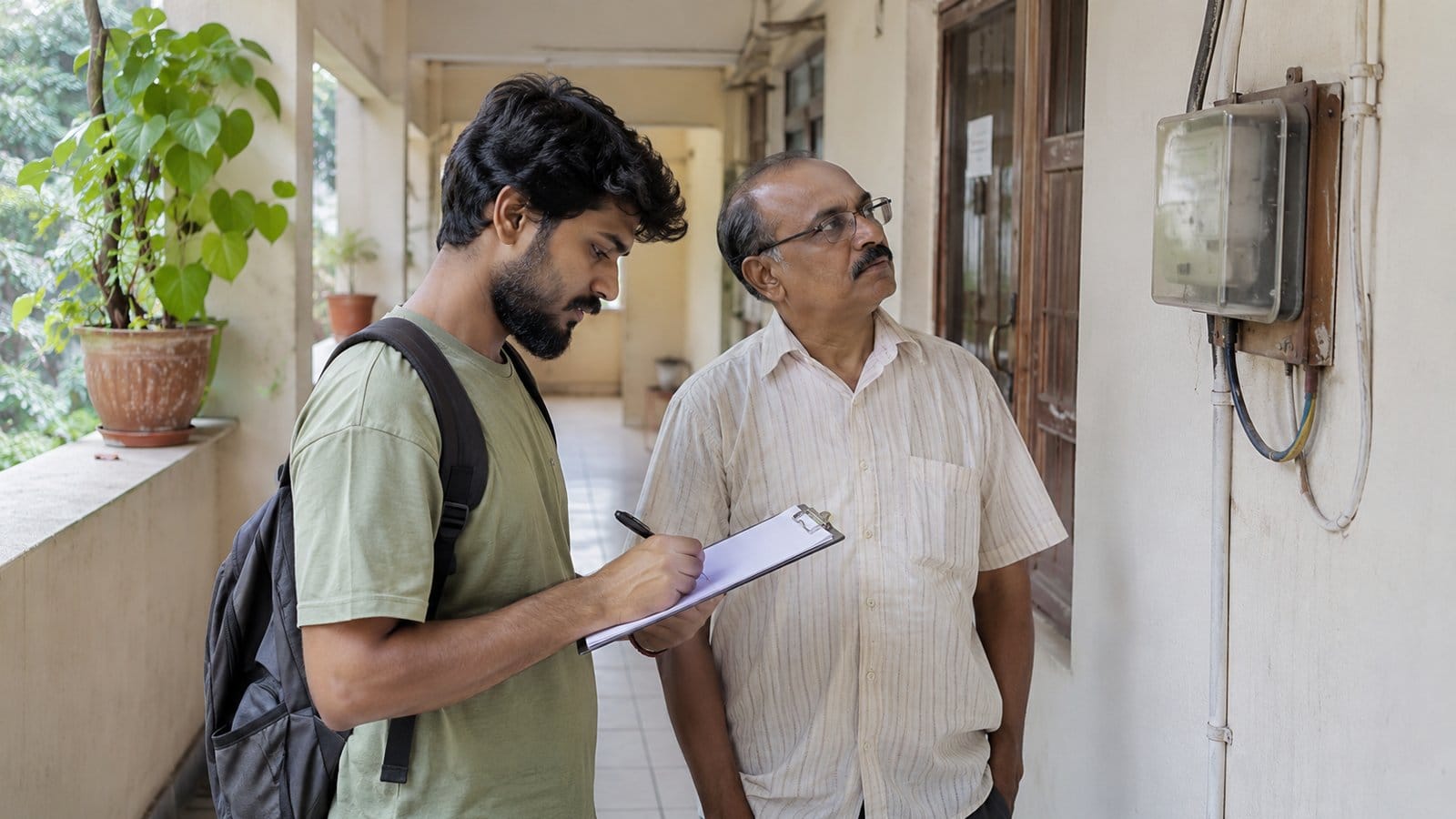
- Take the reading at handover, photograph it, and have both sides sign it.
- Work out the tenant's share from the last paid bill's reading to the handover reading, plus the part-month fixed charge if one applies.
- Hold back only that amount from the security deposit, or a figure close to one month's bill, and refund the rest at handover.
- Settle the difference when the bill arrives, with the bill shared as proof.
If the owner is ending the account, or the tenant held the connection in their own name, a special reading and final bill can be requested from DHBVN. Our DHBVN connection transfer guide sets out that process and the deposit refund step by step, so we do not repeat it here.
Who pays on a prepaid meter or a society sub-meter?
A DHBVN prepaid smart meter is still DHBVN's supply, billed at the same tariff. HERC's 25 March 2026 release says prepaid users get a 5% rebate on both energy and fixed charges. The occupant normally recharges it; the agreement should say who keeps any balance left at move-out.
A society sub-meter is billed by the developer or the residents' body, not DHBVN. Under regulation 6.6 of HERC's 2020 single-point supply regulations, a society may not bill residents more for grid electricity than the domestic tariff HERC has approved, and overcharged residents may file a joint complaint with the Consumer Grievance Redressal Forum or the Electricity Ombudsman. Regulation 6.8 lets the society charge separately for generator backup, and the Commission said power, backup and common-area charges may come off one prepaid balance only if the bill shows each one separately.
For a tenant, that means three questions to the estate office before signing: what the fixed or monthly lines on the sub-meter statement are for, who gets the unused balance at move-out, and whether maintenance is taken from the same balance. Maintenance is a separate cost from electricity, so if one balance funds both, the agreement should say who pays each.
A short checklist for tenants and owners
- To do: Name the payer of fixed charges in the agreement, not only "electricity".
- To do: Record the meter reading at move-in and at handover, with photos.
- To do: Check the sanctioned load and the fixed-charge category on the bill.
- To do: Agree how part months are shared.
- To do: Agree what part of the deposit is held for the last bill, and for how long.
- To do: For prepaid meters, agree who keeps the unused balance.
- To do: For a load increase, agree who applies and who pays before anyone applies.
Key takeaway
No Haryana law decides who pays DHBVN fixed charges, so the rent agreement does. Tie the tenant's share to the meter readings at move-in and handover, keep the owner responsible for empty months and old arrears, and hold back only the last bill from the deposit.
When the electricity clauses are agreed, the move is the next job: talk to us, packers and movers in Gurgaon, and see the household shifting page for what a home move includes.
The above is general information for renters and owners, and is not legal advice. Tariffs, regulations and tenancy laws change, so confirm the tariff in force with DHBVN or HERC directly, and ask a lawyer about your own agreement before you rely on any clause above.
Sources
- Sales Circular No. D-04/2025: Schedule of tariff for supply of energy for FY 2025-26
- HERC keeps power tariff unchanged for FY 2026–27
- Various charges required for new connection application
- Single Point Supply to Employers' Colonies, Group Housing Societies, Residential Colonies, Office cum Residential Complexes and Commercial Complexes of Developers, and Industrial Estates/IT Park/SEZ Regulations, 2020
- The Model Tenancy Act, 2021
- The Model Tenancy Act, 2021 (full text)
- The Haryana Urban (Control of Rent and Eviction) Act, 1973
- The Haryana Government has approved the Haryana Urban Tenancy Act, 2018