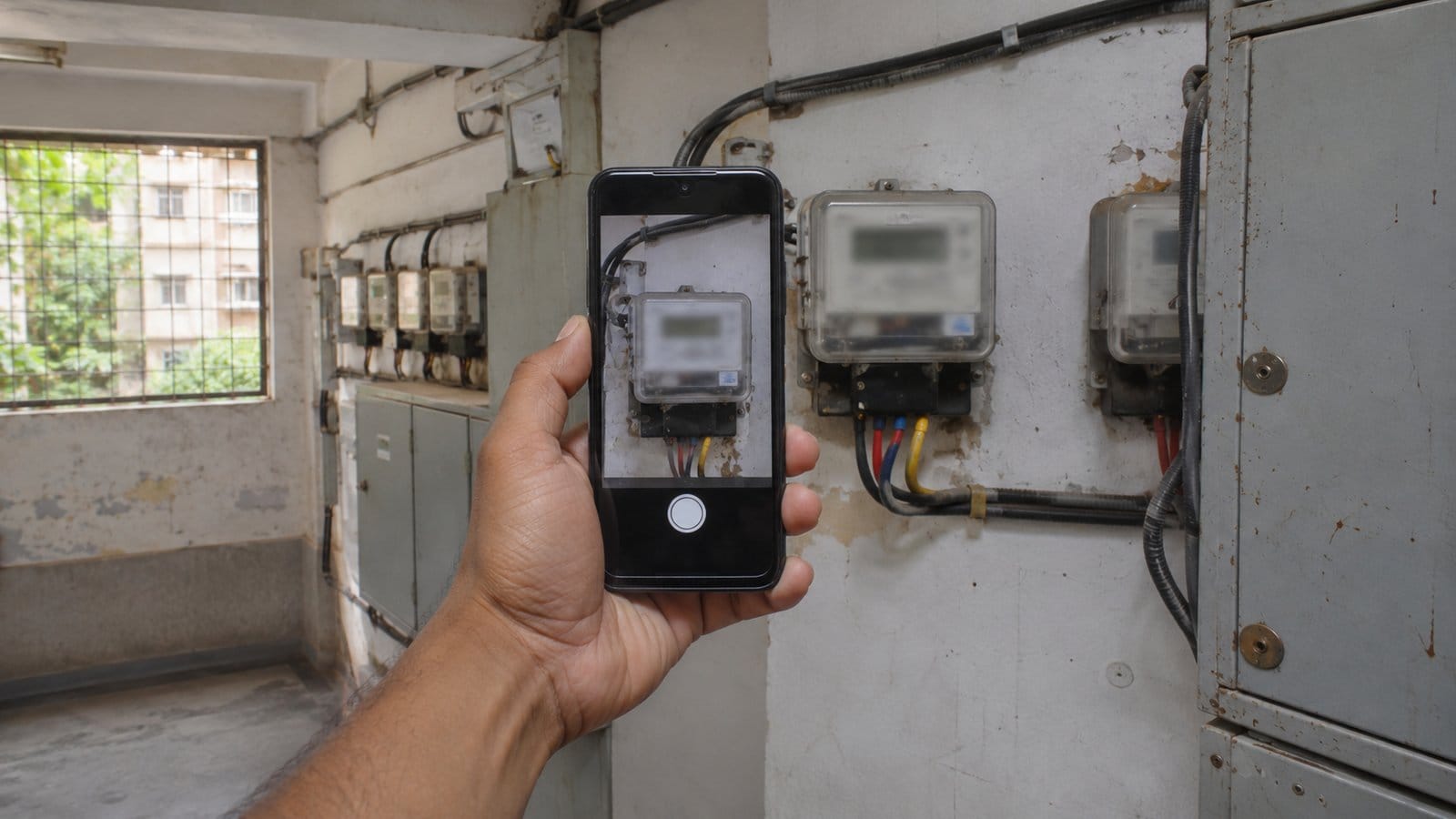
The current electricity rate per unit in Gurgaon, for a home on a direct DHBVN connection with a load up to 5 kW, is Rs 2.95 for the first 150 units a month, Rs 5.25 for 151–300, Rs 6.45 for 301–500 and Rs 7.10 above 500. Smaller connections of up to 2 kW pay Rs 2.20 for 0–50 units and Rs 2.70 for 51–100, and the Haryana Electricity Regulatory Commission (HERC) kept every one of these rates unchanged for 2026-27.
Those are the rates in Dakshin Haryana Bijli Vitran Nigam's (DHBVN) own tariff circular, which we read on 19 November 2026 together with HERC's press releases. Many people who move into a Gurgaon flat never see a DHBVN bill, though. If your society buys power in bulk and bills you itself, or runs a diesel generator for backup, different rules decide your rate. This guide sets out all three.
What are DHBVN's domestic rates per unit for 2026-27?
DHBVN's Sales Circular D-04/2025, issued on 11 April 2025, carries the schedule HERC approved in its order of 28 March 2025, in force from 1 April 2025. On 25 March 2026 HERC announced that the tariff would stay unchanged for 2026-27 from 1 April 2026, so the schedule below is still the one that applies. We looked for a separate 2026-27 circular on DHBVN's site and did not find one.
| Category (by connected load) | Units in the month | Energy charge per unit | Fixed charge |
|---|---|---|---|
| Category I: up to 2 kW | 0–50 | Rs 2.20 | Nil |
| 51–100 | Rs 2.70 | Nil | |
| Category II: up to 5 kW | 0–150 | Rs 2.95 | Nil |
| 151–300 | Rs 5.25 | Nil | |
| 301–500 | Rs 6.45 | Rs 50 per kW a month | |
| Above 500 | Rs 7.10 | Rs 50 per kW a month | |
| Category III: above 5 kW | 0–500 | Rs 6.50 | Rs 75 per kW a month |
| 501–1,000 | Rs 7.15 | Rs 75 per kW a month | |
| Above 1,000 | Rs 7.50 | Rs 75 per kW a month |
The circular lists no monthly minimum charge for any of the three domestic categories. Your category depends on the load sanctioned for your connection, which is printed on the bill. Category I's table stops at 100 units, so it suits only a very small connection; check the load before you compare your bill with these rates.
What changed in April 2025, and what stayed the same in 2026?
The 2025 order raised the lower slabs by 20 paise. The Tribune reported on 3 April 2025 that 0–50 units went from Rs 2 to Rs 2.20, 51–100 from Rs 2.50 to Rs 2.70, and the 0–150 slab from Rs 2.75 to Rs 2.95. HERC's own release of 2 April 2025 said monthly minimum charges were waived for domestic consumers using up to 300 units with a load up to 5 kW, so they pay only for what they use.
For 2026-27 nothing moved. The Tribune's report of 25 March 2026 says the order was signed that day by the chairman, Nand Lal Sharma, and members Mukesh Garg and Shiv Kumar, although the two power companies had projected a combined gap of about Rs 4,484.71 crore. HERC's release puts the number of consumers covered at 83,79,739.
What else appears on a DHBVN bill besides the unit rate?
Taxes and a fuel adjustment, so the average you pay per unit can be higher than the slab rate. Note 6 of the circular says the schedule does not include electricity duty, municipal tax or panchayat tax, which the state government sets by notification, or the fuel surcharge adjustment (FSA). We did not find the current amounts for these on an official page, so read them off your own bill rather than relying on a figure from a third-party calculator.
One line can bring the bill down. The circular gives a 5% rebate to consumers supplied through prepaid smart meters, and HERC's 2026 release says the rebate covers energy and fixed charges alike. That applies to a DHBVN smart prepaid meter, not to a prepaid sub-meter installed by your society.
What do Gurgaon societies charge for grid power?
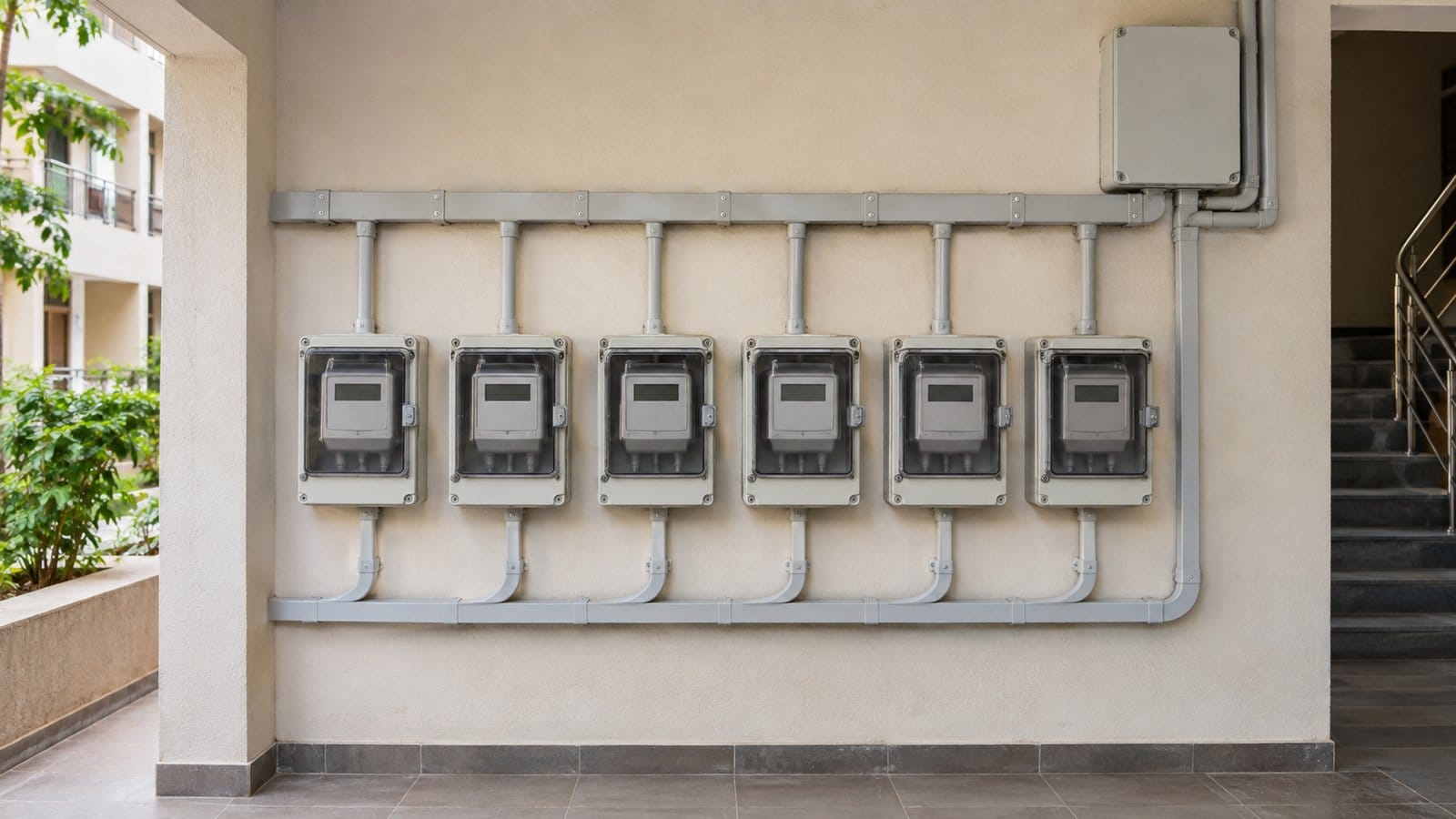
Many high-rise societies in Gurgaon take one bulk connection from DHBVN and bill each flat themselves; The Tribune counted more than 300 such societies in the city in 2024. DHBVN charges such a society under Bulk Supply (Domestic): Rs 5.80 a unit when consumption does not exceed 800 units per flat in the month, Rs 6.60 above that, and a fixed charge of Rs 150 per kW a month of recorded demand. That is what the society pays, not what it may charge you.
What it may charge you is capped. Regulation 6.6 of HERC's Single Point Supply Regulations, 2020 says a society or developer must not bill residents for electricity at a rate higher than the Domestic Supply tariff the Commission has approved. If it does, residents can jointly complain to DHBVN's Consumer Grievance Redressal Forum or the Electricity Ombudsman. In its statement of reasons for those regulations, the Commission recorded that some developers and resident associations had added a 12% administration charge to energy bills and had linked maintenance dues to the power supply, and ruled that the grid bill must not be merged with maintenance or backup charges.
The record since then is mixed:
- September 2023. DHBVN served notices on 25 builders and resident associations in New Gurugram, The Tribune reported, alleging they charged residents Rs 10 a unit where the rate should have been Rs 6. The societies named were in Sectors 103 to 112.
- February 2024. Only 15% of more than 300 Gurugram societies had switched to unified billing, a DHBVN system started in 2022 that bills each flat for its own use at the regular tariff, the paper reported. DHBVN's managing director, P.C. Meena, said the company was considering making it mandatory.
- March 2026. A property news site reported on 10 March 2026 that HERC had directed the developer and the resident association of Uniworld Gardens II to refund excess electricity charges and to bill under the 2020 regulations, with a Rs 50,000 penalty on the association.
How much does DG backup power cost per unit?
There is no regulated rate, so each society sets its own. Regulation 6.8 lets a society charge residents separately for generator backup, either as an annual charge or according to each flat's use, through a separate or dual-register meter. The society must also fit a meter recording the generator's total output and have it tested and sealed by DHBVN. Nothing in the regulation sets a price.
Published figures are scarce and old. In June 2019 The Tribune reported that housing societies with generators were charging as much as Rs 25 a unit, and quoted a Sector 92 resident paying Rs 20. We found no newer published figure we could confirm. Ask the estate office for the current backup rate, how it is billed and whether it comes off the same prepaid balance as grid power.
Which of the three will you actually pay?
| Your set-up | Who bills you | Rate per unit |
|---|---|---|
| Independent house or builder floor with its own meter | DHBVN | Slab rates in the first table, plus duty, taxes and FSA |
| Society flat on a DHBVN smart prepaid meter | DHBVN | The same slab rates, less the 5% prepaid rebate |
| Society flat on a single-point connection | Society, developer or its billing agency | Capped at the domestic tariff; the society itself pays Rs 5.80 or Rs 6.60 |
| Generator backup in a society | Society or developer | Set by the society; no published cap |
Changing the name on a DHBVN account, the final reading when you leave and the deposit refund are explained step by step in our DHBVN connection transfer guide.
What should a new tenant ask before signing?
The answers differ from one tower to the next, so put these questions to the owner or the estate office before you sign:
- To do: Who sends the electricity bill: DHBVN, the society, the developer or a billing agency?
- To do: What is the per-unit rate for grid power, and does it match the slab rates above?
- To do: Is generator backup charged per unit or as a yearly fee, and at what rate?
- To do: Are maintenance or common-area charges taken from the same prepaid balance?
- To do: What sanctioned load does the flat have, and which category does that put it in?
- To do: Can you see the last three bills or recharge statements?
- To do: On moving out, how is unused prepaid balance refunded?
Put the answers on electricity in the rent agreement itself; our guide on making a rent agreement in Gurgaon explains the registered and notarised options. If you are still choosing where to live, our comparison of old Gurgaon and new Gurgaon for renters covers the wider trade-offs.
Key takeaway
A DHBVN home connection in Gurgaon pays Rs 2.20 to Rs 7.10 a unit in 2026-27, by slab and load, plus duty, taxes and fuel adjustment. A society billing you for grid power may not charge more than that tariff; generator backup is priced by the society.
Once the flat is fixed, talk to us as packers and movers in Gurgaon about the move itself; what a home move with us includes is on the household shifting page.
This article is general information, not legal or billing advice. Tariffs, taxes and society rules change, so check the current schedule on DHBVN's and HERC's official websites, or with your society's estate office, before you rely on any figure.
Sources
- Sales Circular No. D-04/2025: Schedule of tariff for supply of energy for FY 2025-26
- Press releases: HERC keeps power tariff unchanged for FY 2026–27 (25 March 2026); tariff order for FY 2025-26 (2 April 2025)
- Haryana electricity commission keeps power tariff unchanged for 2026-27
- Haryana revises power tariffs; domestic consumers face higher rates starting April 1
- Single Point Supply to Employers' Colonies, Group Housing Societies, Residential Colonies, Office cum Residential Complexes and Commercial Complexes of Developers, and Industrial Estates/IT Park/SEZ Regulations, 2020
- DHBVN slaps notices on 25 societies for flouting norms
- Only 15% societies in Gurugram switch to unified electricity billing
- Gurugram in grip of power crisis
- Haryana commission directs Unitech Realty to refund excess electricity charges collected from residents in Gurugram society